
Beyoncify Yourself
On layoffs, Ubuntu leadership, and connecting to your true worth

It’s May 2026 and my LinkedIn feed has been full of people sharing that they’ve been laid off, mostly by big tech companies like PayPal (4760), Meta (8000), and Intuit (3000) – and lots more. A layoff can really sting, bringing up feelings of rejection and unworthiness. And even the people left behind in the company can feel grief and a kind of survivor’s guilt.
People losing their jobs makes me sad no matter what, but what hurts my heart even more is the mourning that shows up in these posts — for the great collegial relationships and the flourishing teams. Almost without exception, posts hit the same notes: they’ve been impacted by a layoff, how much they enjoyed the relationships they built, what they learned from their colleagues, and how proud they are of what they achieved together as a team. Beyond being a ridiculous waste of talent, of hard-won explicit and tacit knowledge, and one more smashing of the employee-employer social contract, layoffs choke off what individuals can contribute and dismantle the relationships and team bonds they formed.
CEOs are pinning recent layoffs on AI, while other writers about work chalk them up to a monkey-see-monkey-do contagion, or to right-sizing after too much pandemic-era growth. The reasons are surely multivariate, with a big dose of the short-termism that characterizes most public companies.
These days I partner mostly with public sector and middle-market organizations, because I want to work with leaders who still care about investing in people. But we’re all affected by these macroeconomic signals, even when we aren’t personally living through the loss of a job.
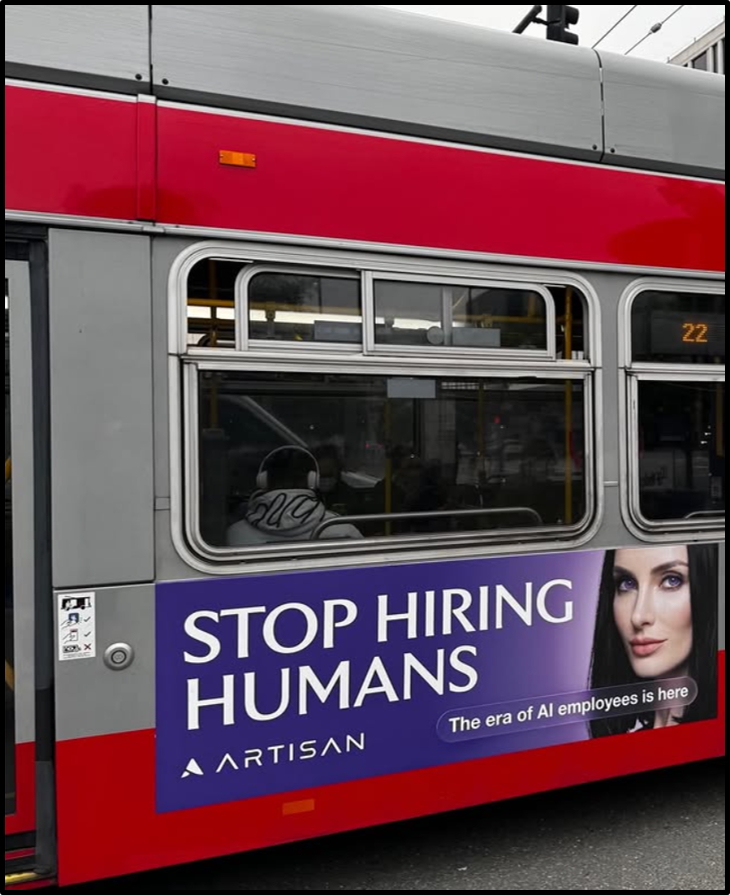
Take this San Francisco MUNI bus sign and notice what it evokes in you, viscerally. Personally, it’s giving me and a whole lot of others the big, creepy dystopian ick. The 24-year-old CEO said it was just an attention-getting joke that went viral, but the ads are still out there all over San Francisco and, as far as I can tell, nobody is laughing. This idea that AI can simply replace humans feels like a threat to our survival, and not the world I want to be living in or helping to create.
Anyway, all of this is to say: it’s been hard to write about cultivating healthy, productive workplaces in the midst of all of this job loss and the dystopian future AI seems to be promising us.
So at the end of last week I just felt DOWN and DONE. I needed to relax, have fun, and blow off some steam. My teenager was at his job and I had no social plans, so I decided to have my own party and rewatch Beyoncé’s film Homecoming in my living room at top volume.1
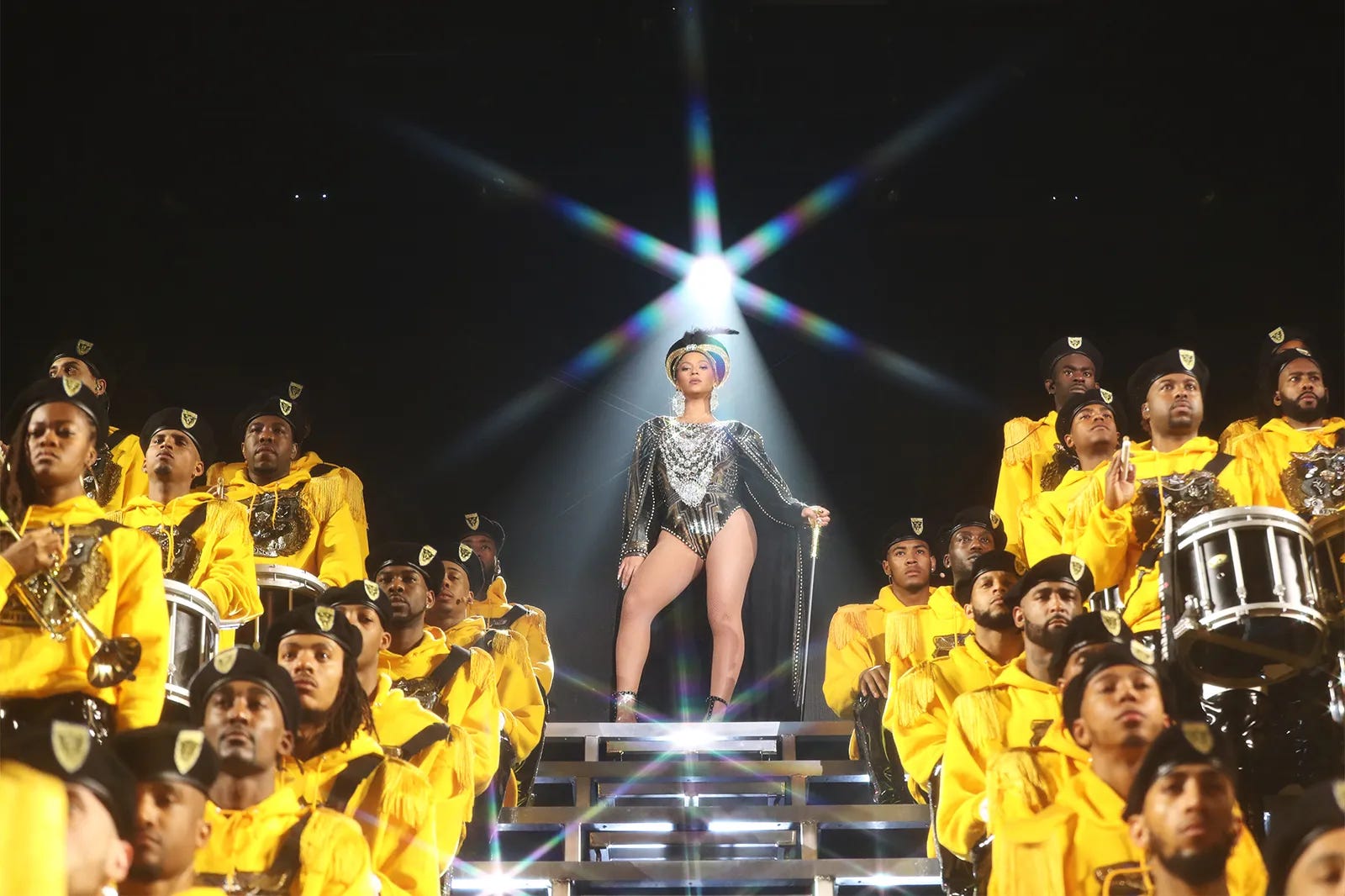
Homecoming takes you through her vision, the making of the show, and the epic Coachella performance where she was the first Black woman to headline — and one thing is clear as you watch it: you are watching a Legend, and history, in the making. This is not hyperbole.
And to think she did this just after giving us Lemonade and before Renaissance and Cowboy Carter. What is this woman driven by to continue to create the art that we never knew we needed that heals, connects, and inspires us?
Ubuntu Leadership in Action
“When I decided to do Coachella, instead of me pulling out my flower crown, it was more important that I brought our culture.” Beyoncé, Homecoming
Beyoncé had the foresight to make Homecoming a film that shows the invisible labor beneath the polished performance. By taking us through months of unglamorous, difficult, repetitive work, she reveals the craft, the meaning, and the relationships that make the performance possible — the kind of effort and value that never shows up on a spreadsheet.
“It was important to me that anyone that had never seen themselves represented felt like they were on their stage as us… I wanted everyone to be grateful for their curves, their sass, their honesty. Thankful for their freedom…We were able to create a free safe space where none of us were marginalized…I wanted every person who has ever been dismissed because of the way they look feeling like they were on that stage killing it.”
Beyoncé as quoted in Homecoming
This is Ubuntu in its truest sense — I am because we are – in all of our unique humanity, together. Beyoncé’s brilliance doesn’t stand apart from the ensemble; it lives because of them, and theirs because of her. Homecoming is a beautiful example of excellent organizational design and high-care leadership: she assembled a massive ensemble, built it around HBCU culture, created opportunities for Black musicians and dancers, and held everyone to a high standard while clearly caring for her people. She created the conditions for the excellence of the whole to shine — a living case study in the whole being greater than the sum of its parts. Watching it, it’s clear that no one is disposable headcount.
Not Another Tech Company Case Study
This is not the first time I’ve turned to Beyoncé for inspiration. A couple of years ago, a consulting partner and I worked with Google to design an offsite for the UX Design team behind their flagship Search product.
The goal of the offsite was to help the team get their creative spark back. But the approach the client proposed — building out case studies of other tech companies that had engineered growth comebacks after a slump, then having the team study them — felt really flat to me. Actually, it felt torturous: sitting there building these case studies, putting myself in the shoes of employees who’d be expected to engage with them and pretend to care about “growing 10X,” whatever that means.
In environments where people are worn down by the relentless pursuit of growth, grieving the loss of laid-off colleagues and expected to “do more with less”...or else…inspiration was never going to come from a tech company case study.
Inspiration struck me while I was driving to the airport and listening to Beyoncé’s recently released Cowboy Carter. I was waxing on to my passenger about what an incredible feat of artistry it was, a reclamation of her southern, country roots, and the smashing of barriers others tried to impose on her. You see, Beyoncé is from Houston, Texas and as she proclaimed proudly in Formation, “you’ll never take the country out me.” She and Destiny’s Child came up performing at rodeos.
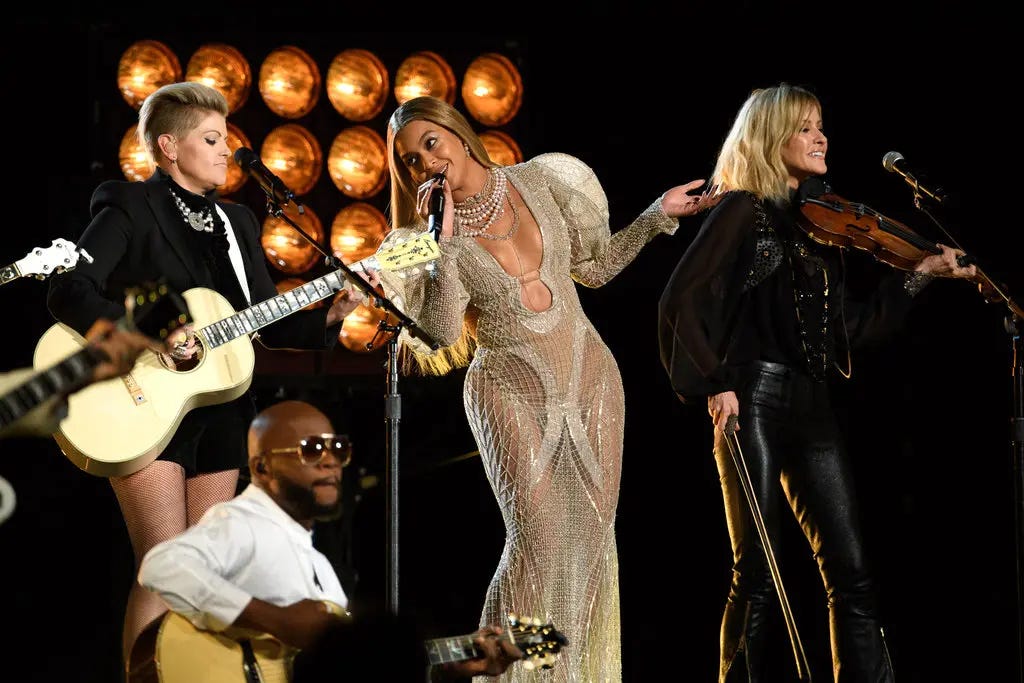
And yet she got a famously chilly – racist – reception when she performed “Daddy Lessons,” her country song from Lemonade, with the Chicks at the 2016 Country Music Awards. Around the same time, the Recording Academy’s country committee declined to consider the song in the country categories, making it ineligible for a country Grammy nomination at all.
In 2024 she gave us Cowboy Carter, her genre-bending, country-inspired album that drew blessings from icons like Willie Nelson and Dolly Parton and gathered up overlooked Black country artists like Linda Martell — the first commercially successful Black woman in country music and the first to play the Grand Ole Opry, pushed out of the industry decades ago and very nearly forgotten.
As I became more and more animated about the revelation that is Cowboy Carter, it became clear: THIS is what inspiration sounds and feels like. The next day I asked my partner what she thought of throwing out the tech company case studies and building the offsite around “lessons from Beyoncé.” She loved it, the client loved it, and the Beyoncé Playbook was born.
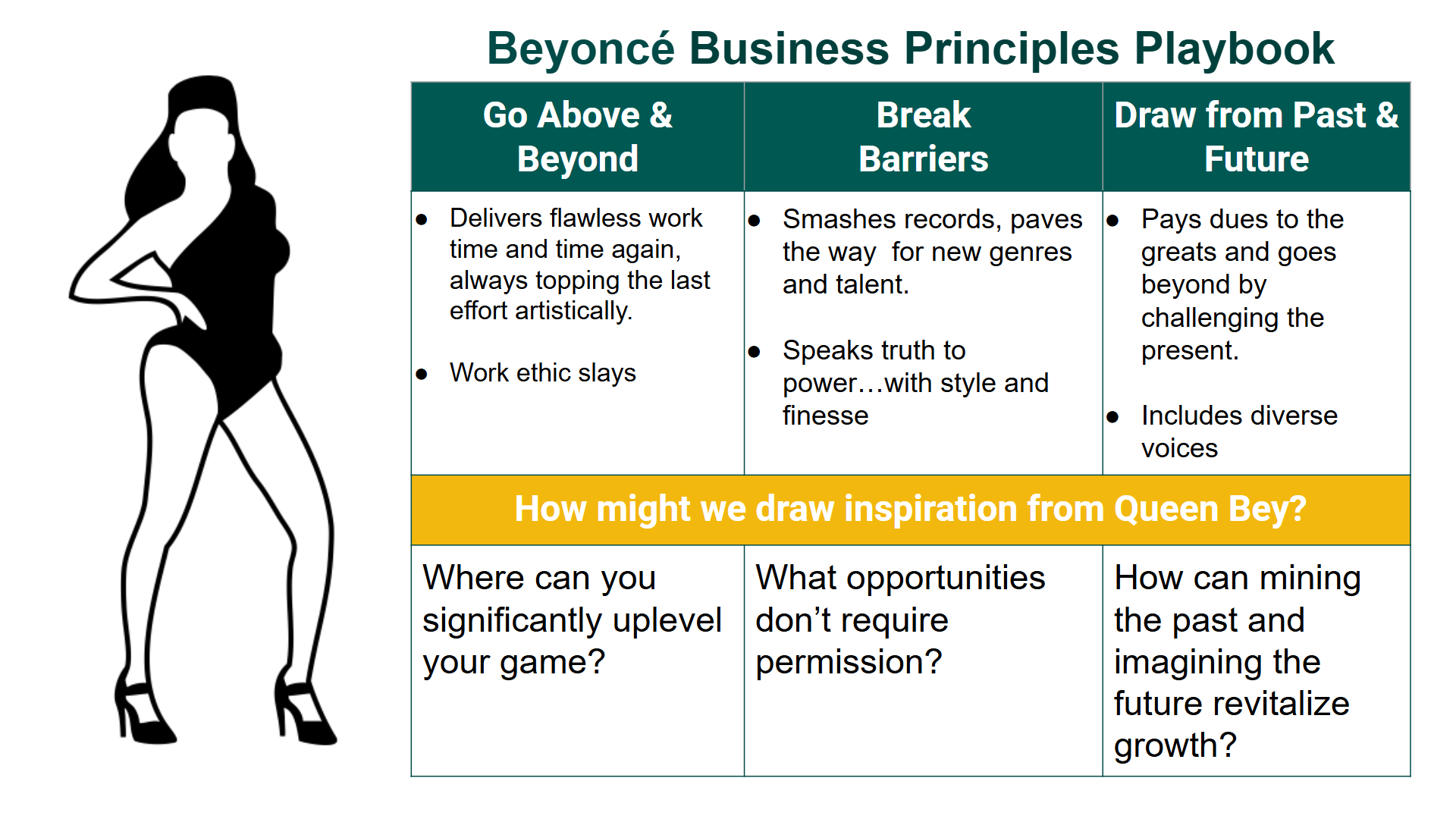
The three principles – Go above & Beyond, Break Barriers, and Draw from Past & Future – offered the spark for offsite attendees to think about their own work differently as well as awaken their own sense of play, creativity, and joy. We knew we had succeeded when we overheard:
“How could we Beyoncify this?”
Beyoncify Yourself
Then came a worldwide Cowboy Carter tour, which I was lucky enough to see twice. All you could see as people streamed into the stadium were cowboy hats, western wear, and fringe. My friend and former colleague Mark McCormick and I stood there taking in this bedazzled spectacle.
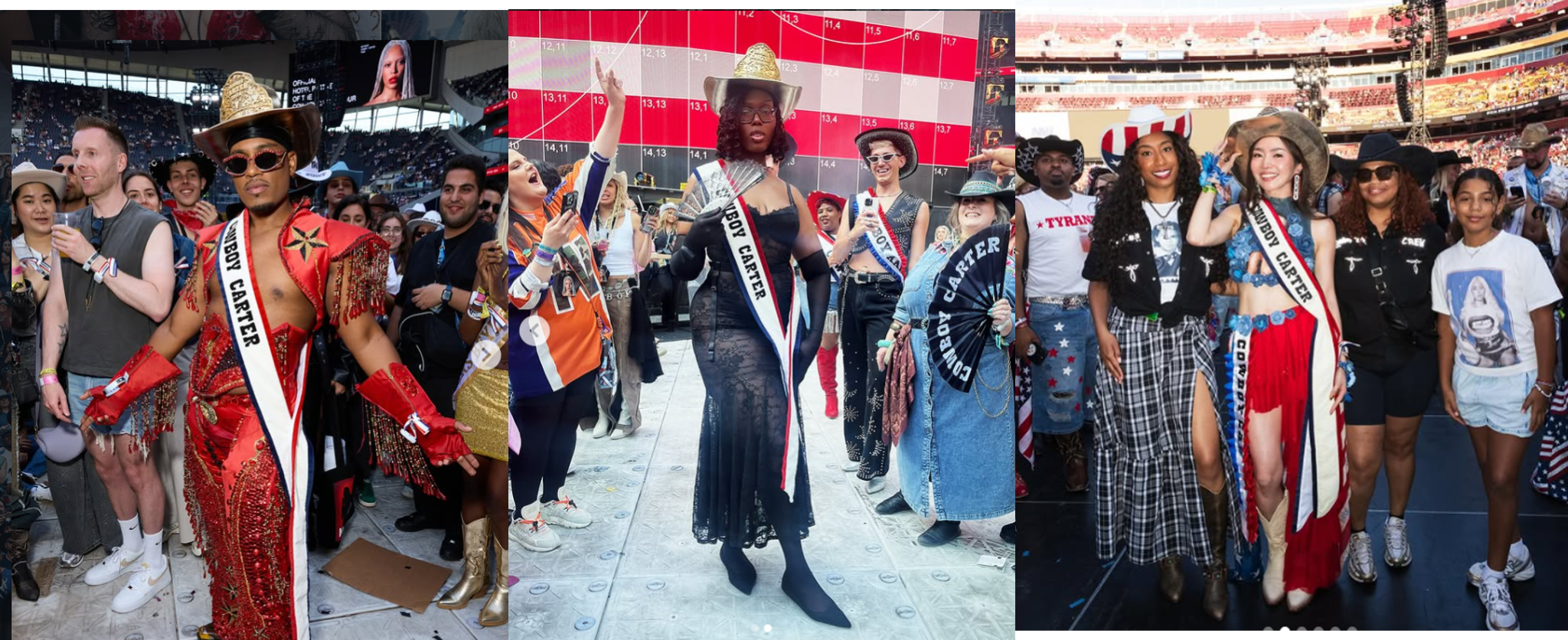
Mark and I have designed many workshops together where we push people to imagine the future in new ways, so naturally my mind went there. In awe, I asked him: can you imagine if, ten years ago, we’d shown a group these photos of Cowboy Carter concertgoers and asked them the kind of question we always ask — “Tell me the story of what’s going on here. What future are we living in?”
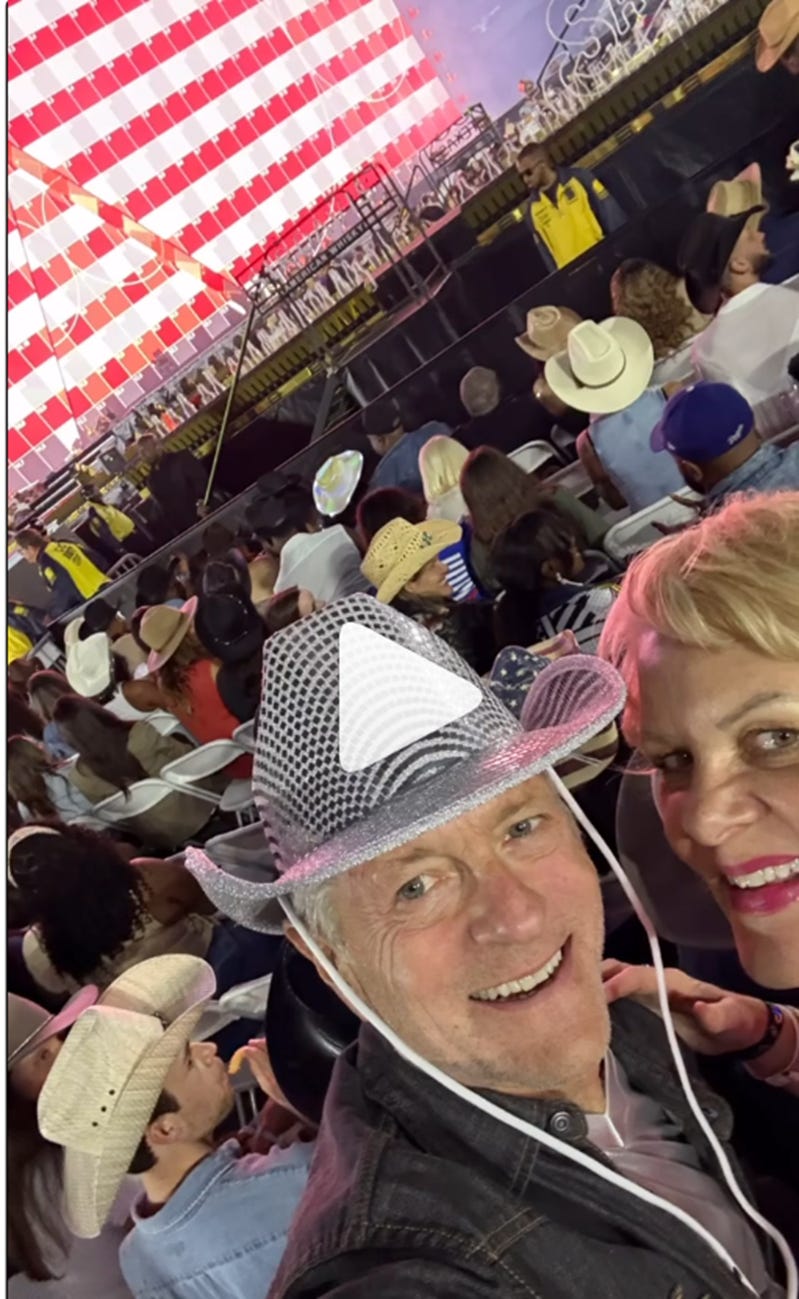
The IG reel Mark made of our first show at SoFi in LA
I highly doubt anyone would have pictured a contrified Beyoncé album that would go on to win both Best Country Album and Album of the Year at the 2025 Grammys — making her the first Black woman to win the country category, and the first to take the top prize in the 21st century.
Beyoncé gives us music we never saw coming, nourishes us in ways we didn’t know we were deficient, and connects us to the possibility and joy of being alive.
I create at my own pace, on things that I hope will touch other people. I hope my work encourages people to look within themselves and come to terms with their own creativity, strength, and resilience. I focus on storytelling, growth, and quality. I’m not focused on perfectionism. I focus on evolution, innovation, and shifting perception.
With Beyoncé, it’s just nonstop evolution and growth – fueled by mega talent, beauty, fame, and power – and deep humanity. Do you think AI can do what Beyoncé does? If it tried, would you feel the same way about it?
Play Your Own Game
A while back, I asked the question, What Game Are We Playing? using James Carse’s finite and infinite game framework. Beyoncé is, without a doubt, playing an infinite game, and it's so clear she's motivated by something much greater than a paycheck. She is unwavering in her desire to center and celebrate Black excellence — as both a proud legacy and a powerful future. With Cowboy Carter, she gives us a stunning example of transmuting rejection into growth, for herself as an artist and for the whole country music genre.
“I’m a firm believer that the past, present, and future are very connected. Our history is a portal to our future.”
The Business of Being Beyoncé Knowles-Carter
I’ve given keynote talks about the human qualities that AI can never take from us — our drive to care, to connect, and to create. And I’ll be honest with you, when things aren’t going my way professionally, I lose sight of those qualities in myself all the time, and I let my sense of worth get tangled up with my output and my labor.
Watching Beyoncé is part of what pulls me back. Her worth was never something the Country Music Awards or the Recording Academy could grant her or take away — it lives in the drive itself, in the caring and the connecting and the creating, and that is the part no finite game has ever been able to touch.
That’s the thing I most want you to take from all of this. The layoff economy and the old country music establishment are playing the same finite game — the one where people are line items to be cut, talent to be used up, names to be crossed off the list. It’s the game that discarded Linda Martell after she broke the ground the rest of the genre now stands on, and it’s the same game playing out across all those LinkedIn posts right now. But being deemed expendable by a finite game has never once been a true measure of anyone’s worth.
So yes, there is only one Beyoncé. But there is only one you, too, and nothing — not a layoff, not a rejection, not an algorithm — can take away your creativity or the particular space you occupy here on this earth. We are all making our way down a long, dark hallway of uncertainty between the old world and the new one, but we can choose to birth a new future. We can keep using our gifts to care, to connect, and to create, and when we do, we reject corporate dehumanization and align ourselves with Life.
I think about the environmental activist Pattie Gonia, who uses joy itself as a tactic to get people to protect the earth, and who, like Beyoncé, is carving a path nobody handed her.2 You could say she’s Beyoncifying her activism. We can all Beyoncify something, in our own way.
As Beyoncé says in the final line of Homecoming:
"If my country ass can do it, they can do it."
Let's do it.
____
Want to talk about Beyoncifying your organization? Book time with me.
Homecoming is streaming on Netflix.
Pattie Gonia is being sued by Patagonia for copyright infringement. Here is an insightful analysis and alternative approach to litigation offered by Environmental Climate Psychologist, Dr. Renée Lertzman
What a great read! Fun to see Mark being Mark, too!
I look forward to watching the film. I’d never really listened to Beyoncé until Cowboy Carter, which I listened to end to end and loved. Wasn’t that I wasn’t a fan I just hadn’t been properly introduced to her music. She is clearly so much more than her musical talent, and I really appreciate this perspective. I think it’s the best of your writing - that I’ve had the opportunity read. Honestly I feel lucky to be at the tail end of my career, although I worry for both my kids and grand daughter. In some ways I see & feel today’s youth as so much more progressive than my generation and a couple in between, not politically progressive (although they are that too) but thoughtfully progressive and building amazing community with their peers, but it’s impossible not to also see how much more difficult it is to get by. When you’re worried about paying the bills, feeding your kids, there’s not a lot of room for personal growth.